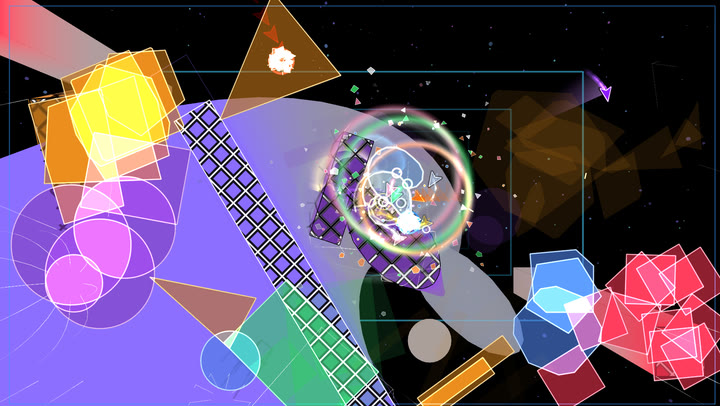
The third dimension has come for your flat little world.
One Siri Remote to twelve players.
Apple TV, Mac, iPhone, iPad.
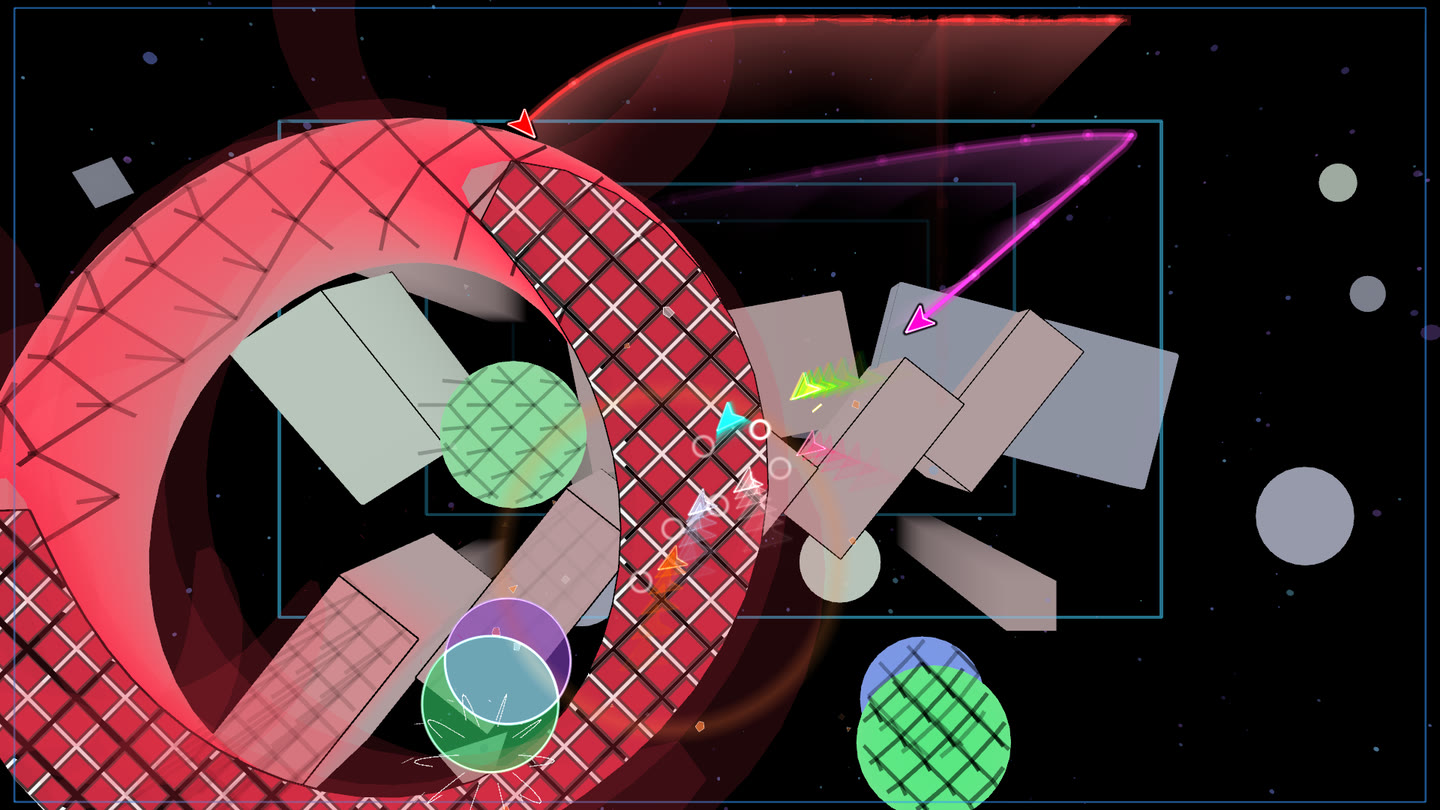
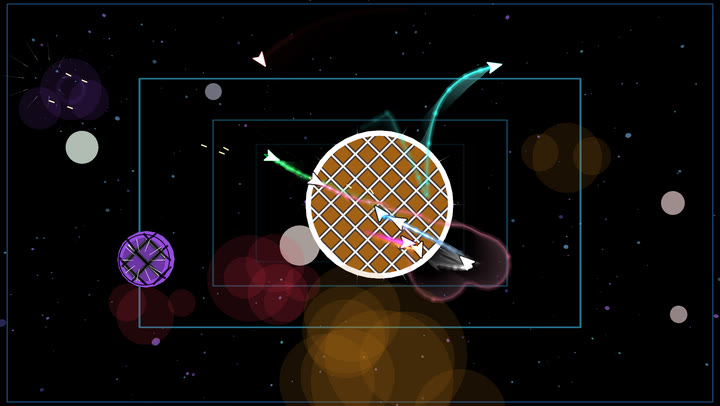
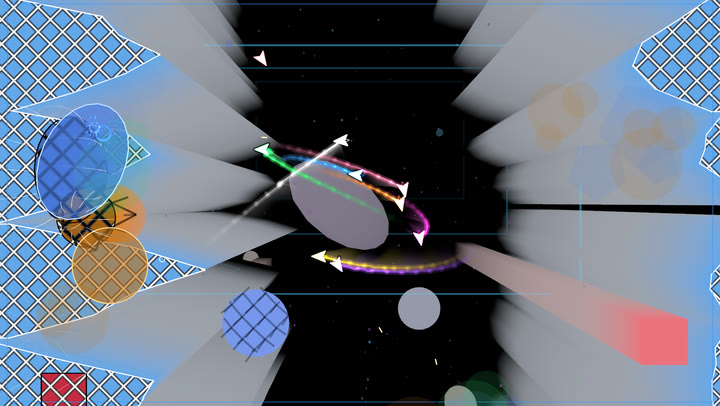
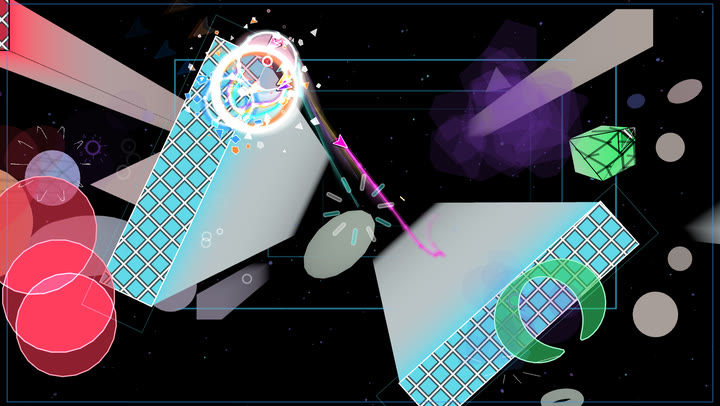
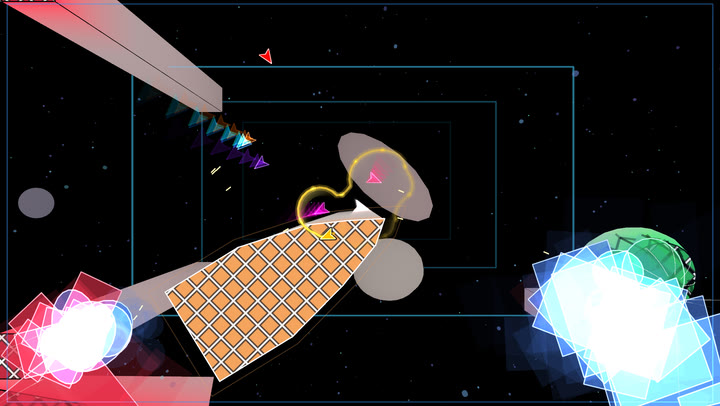
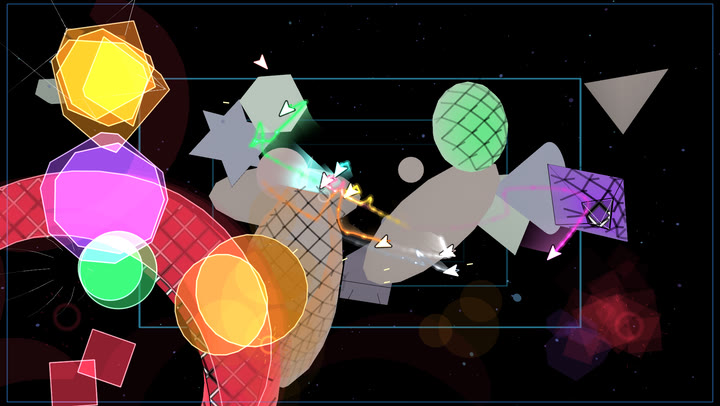
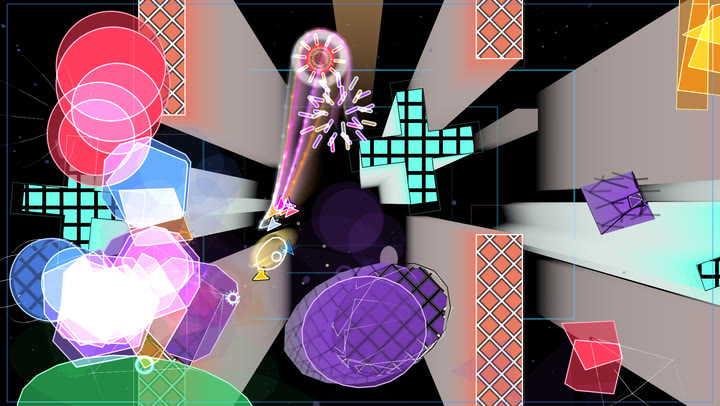
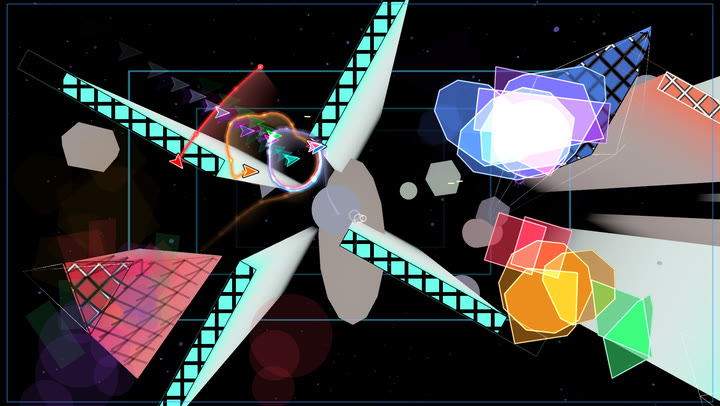
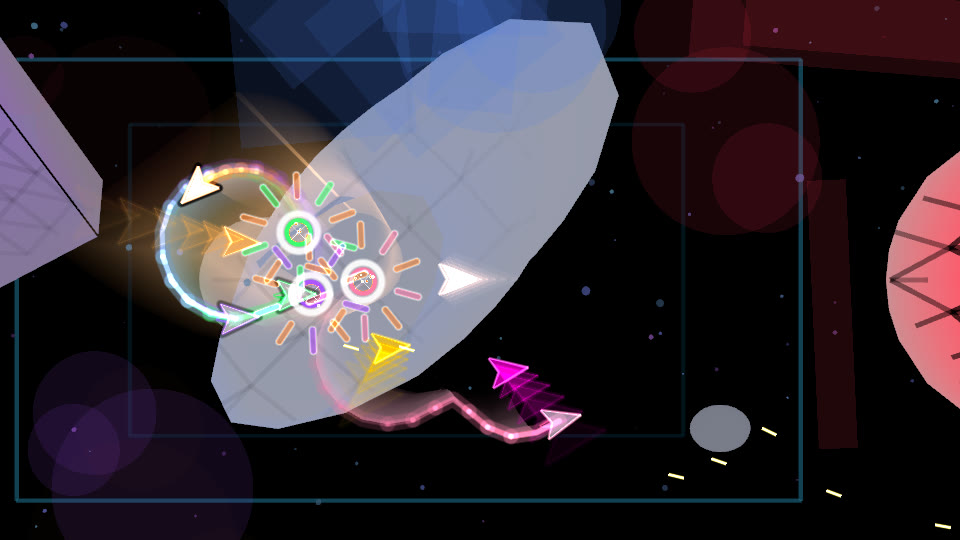
Solid Siege is a shooter for everyone in the room. Your ships live on a flat playfield. Everything attacking them is solid: 3D shapes drifting in from beyond the screen, grey and far away until they come close enough to take on colour. Where a solid cuts through your world its cross-section is hatched, and deadly to touch, and on the beat it sheds flat shapes. Those you can shoot.
One Siri Remote to twelve players
Play alone with nothing more than your Apple TV's Siri Remote. Or fill the room: game controllers pair with the host (an Apple TV takes four, plus its remote), and phones and browsers bring everyone else, up to 12.
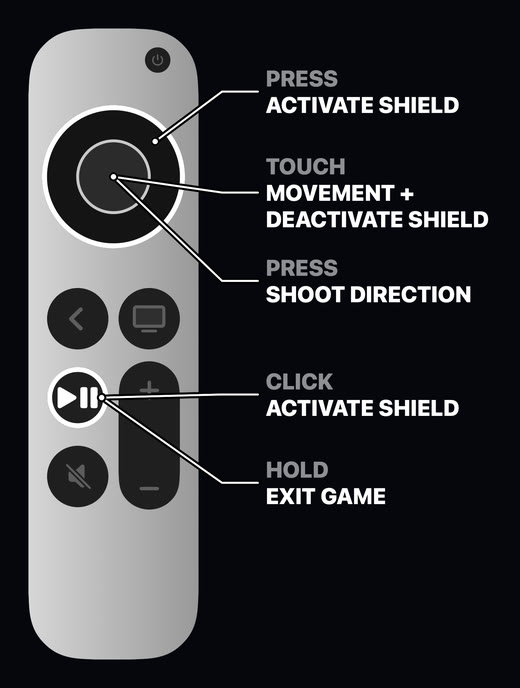
- A Siri Remote: touch the clickpad to move and click it to fire. Play/pause activates the shield, and on the silver remote so does pressing the clickpad's outer rim.
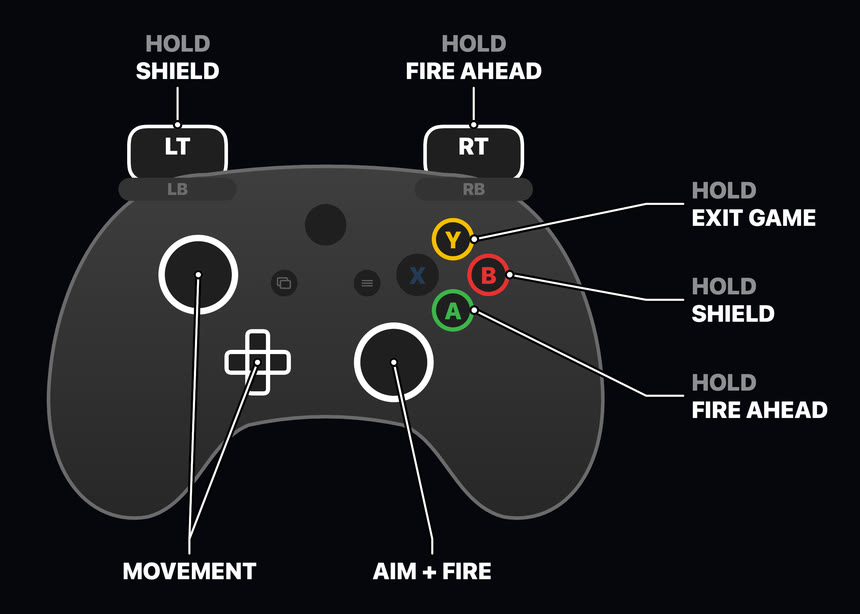
- Game controllers: Xbox, PlayStation and other two-stick controllers. The left stick moves, the right stick aims and fires.
- Apple devices with the app: an iPhone, iPad or Mac on the host's WiFi joins by itself, with its own view of the game.
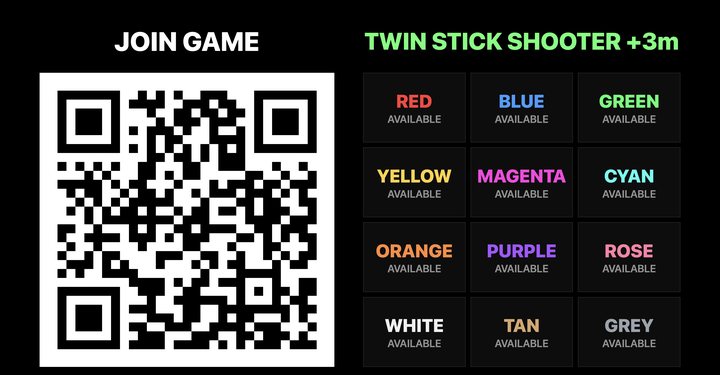
- Any phone's web browser: scan the QR code on the host's screen, with nothing to install. The whole screen is the controller: left thumb moves, right thumb fires, and wherever a thumb lands is the center of its stick.
- Any laptop's web browser: the keyboard, with split keyboard for two players. A Mac host's own keyboard can be used by 1 or 2 players too.
No score
There is no score. Play together, or against each other: that's up to the room.
You get one life. Fall, and your ship becomes a ghost that can't move but can still shoot, until another player loops their trail around it. The same loop destroys every shape inside it, and shatters any solid close behind it on its way in.
Shots never hurt other players. They shove them: out of trouble, or into it. A raised shield destroys any shape it touches and stops shots shoving you, but it won't save you from rock or a solid's cut. It also stops you moving and firing, every use is shorter than the last, and hold it until it runs out and your ship explodes.
The soundtrack plays the game
Solid Siege's music isn't a recording. It is synthesised live as you play: a hundred distinct minutes of electronic music, in a new key and with new melodies every game.
The music decides when enemies arrive. A solid sheds its shapes only where it crosses the board on a beat: every two beats in a calm passage, every sixteenth note in a frantic one. Square and triangle enemies hop on the beat, the small ones with the hi-hats, the big ones swinging with the pads. Even the cavern rock is born on loud hits.
And how you fight decides what the music does next. In most minutes kills get the minute's own musical reply; three in one bar and the next bar ends on a snare roll. Every shot is a note of the chord that's playing, higher the higher up the screen you fire. The paint a shape leaves behind plays a note when you fly through it, and keeps playing in the loop. Let the shapes crowd round a ship for two bars and the track moves on early to its next, fuller section.
A hundred minutes
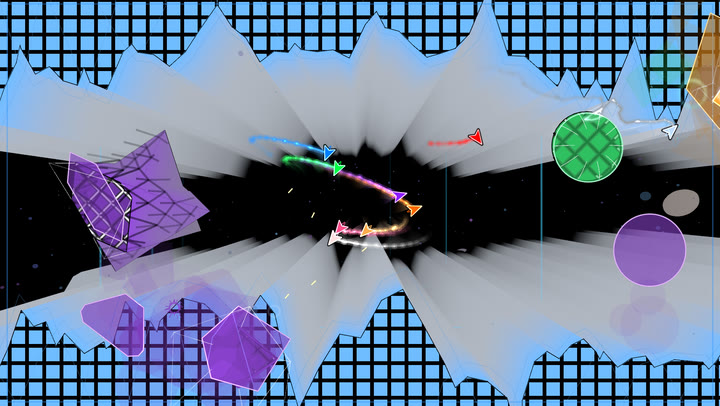
A round is one continuous journey, and every minute of it is different. There are boss minutes: a cylinder that hunts you, a turning arm, a torus as big as the screen. There are caverns of rock, deadly where it's hatched in white, pushy where it's gridded in black, shoving ships into danger. And at +1m there's a tunnel whose walls are built from the soundtrack's reply to every kill.
The further a round gets, the later the minutes you can start from next time. Progress follows you through iCloud, between your Apple TV, iPhone, iPad and Mac.